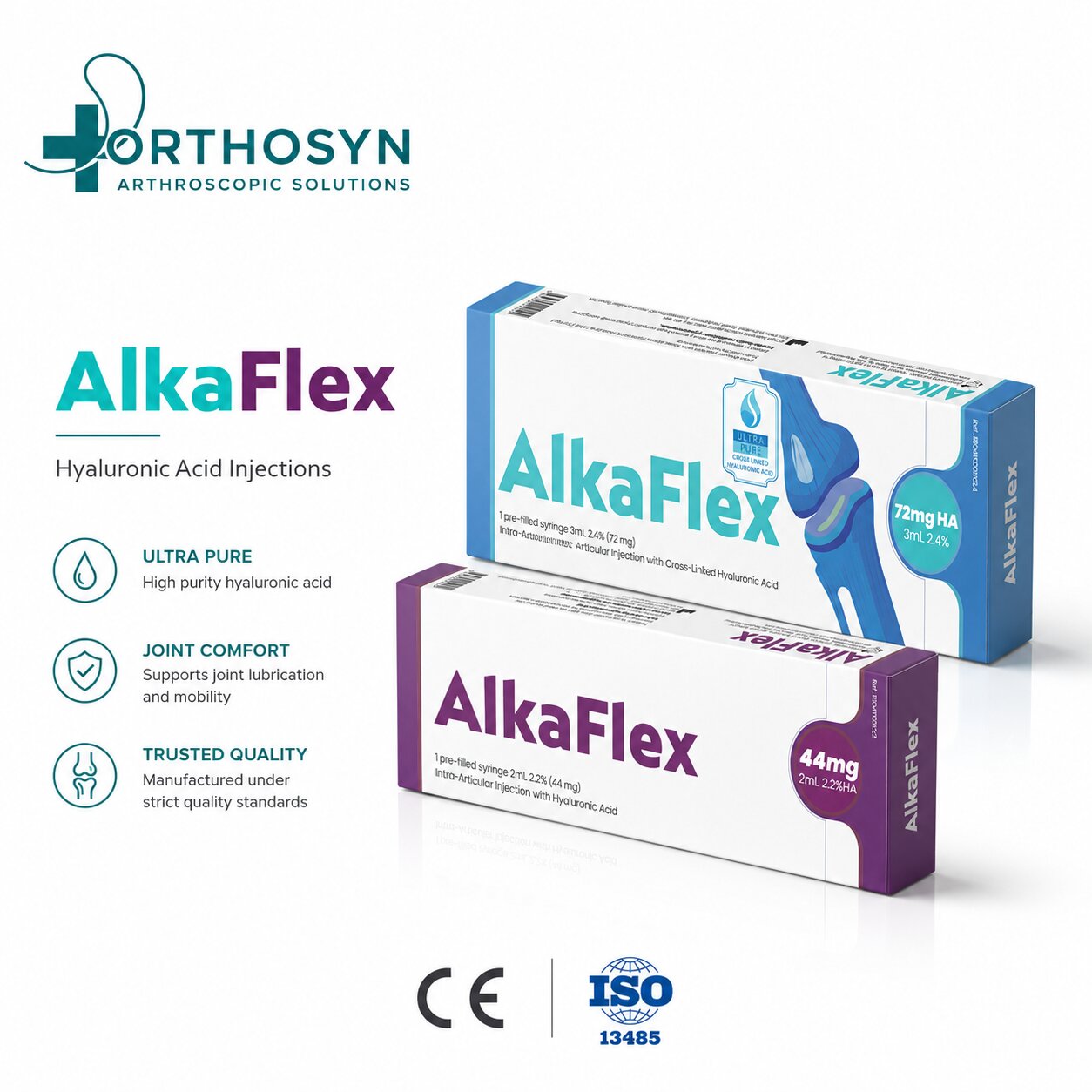
Hyaluronic acid (HA) injections are widely used to manage the symptoms of osteoarthritis and improve joint function. As treatment options have evolved, healthcare professionals can now choose between cross-linked and non cross-linked formulations depending on the patient's condition and treatment objectives.
Although both products contain hyaluronic acid, their manufacturing processes and physical characteristics differ, influencing how they behave inside the joint.
Understanding these differences helps physicians select the most appropriate treatment for individual patients.
Hyaluronic acid is a naturally occurring polysaccharide found in synovial fluid and connective tissues.
Its primary functions include:
In osteoarthritis, both the concentration and quality of naturally occurring hyaluronic acid decrease over time.
Cross-linking is a manufacturing process that chemically connects individual hyaluronic acid molecules, creating a stronger three-dimensional network.
This modification increases the stability of the gel while maintaining its lubricating properties.
Cross-linking does not change the biological role of hyaluronic acid but may influence its physical behavior within the joint.
Cross-linked formulations generally exhibit:
These properties allow the product to maintain its structural integrity for a longer period after injection.
Non cross-linked formulations retain the natural molecular structure of hyaluronic acid.
They typically provide:
These formulations continue to play an important role in viscosupplementation for many patients.
The choice between cross-linked and non cross-linked formulations depends on multiple factors, including:
There is no single formulation that is appropriate for every patient.
Regardless of formulation, high-quality hyaluronic acid injections should be manufactured under strict quality standards.
Important considerations include:
These factors contribute to product consistency and patient safety.
Orthosyn Medikal offers a comprehensive range of sterile intra-articular hyaluronic acid injections manufactured through microbial fermentation.
The portfolio includes:
These products are developed to support healthcare professionals in treating a wide range of joint conditions.
Both cross-linked and non cross-linked hyaluronic acid injections have important roles in modern osteoarthritis management.
Rather than identifying one formulation as universally superior, treatment decisions should be based on patient needs, clinical findings, and physician judgment to achieve the most appropriate therapeutic outcome.