Knee osteoarthritis is one of the most common causes of pain and reduced mobility among adults worldwide. As cartilage gradually wears away, patients often experience increasing pain, stiffness, and limitations in daily activities. While total knee replacement remains an effective solution for advanced cases, many patients seek non-surgical options that may relieve symptoms and help postpone surgery.
Hyaluronic acid (HA) injections have become a widely used conservative treatment for patients with mild to moderate knee osteoarthritis. Although they cannot regenerate damaged cartilage or permanently stop disease progression, they may improve joint function and reduce pain, allowing some patients to delay more invasive surgical procedures.
Healthy knee cartilage provides a smooth, low-friction surface that allows the joint to move comfortably. It also works together with synovial fluid to absorb shock during walking, running, and other daily activities.
As osteoarthritis develops:
These changes often reduce mobility and quality of life.
Hyaluronic acid is a naturally occurring component of synovial fluid.
When injected into the joint, HA may help:
These effects may contribute to symptom relief in appropriately selected patients.
No.
Hyaluronic acid injections are not intended to replace knee replacement surgery when surgery is clearly indicated.
Instead, they are considered part of a comprehensive conservative treatment strategy that may help some patients manage symptoms before surgery becomes necessary.
Treatment decisions always depend on:
Healthcare professionals may consider viscosupplementation for:
Patient selection remains one of the most important factors influencing treatment success.
In addition to reducing discomfort, hyaluronic acid treatment may also provide:
Patients may walk, climb stairs, and perform routine activities more comfortably.
Improved lubrication may support smoother movement during daily activities.
Reduced discomfort may facilitate participation in physiotherapy and strengthening exercises.
Many patients report greater confidence and improved comfort during everyday activities following treatment.
No single treatment is appropriate for every patient.
Management of knee osteoarthritis should be individualized and may include:
Combining multiple treatment approaches often provides the best overall outcome.
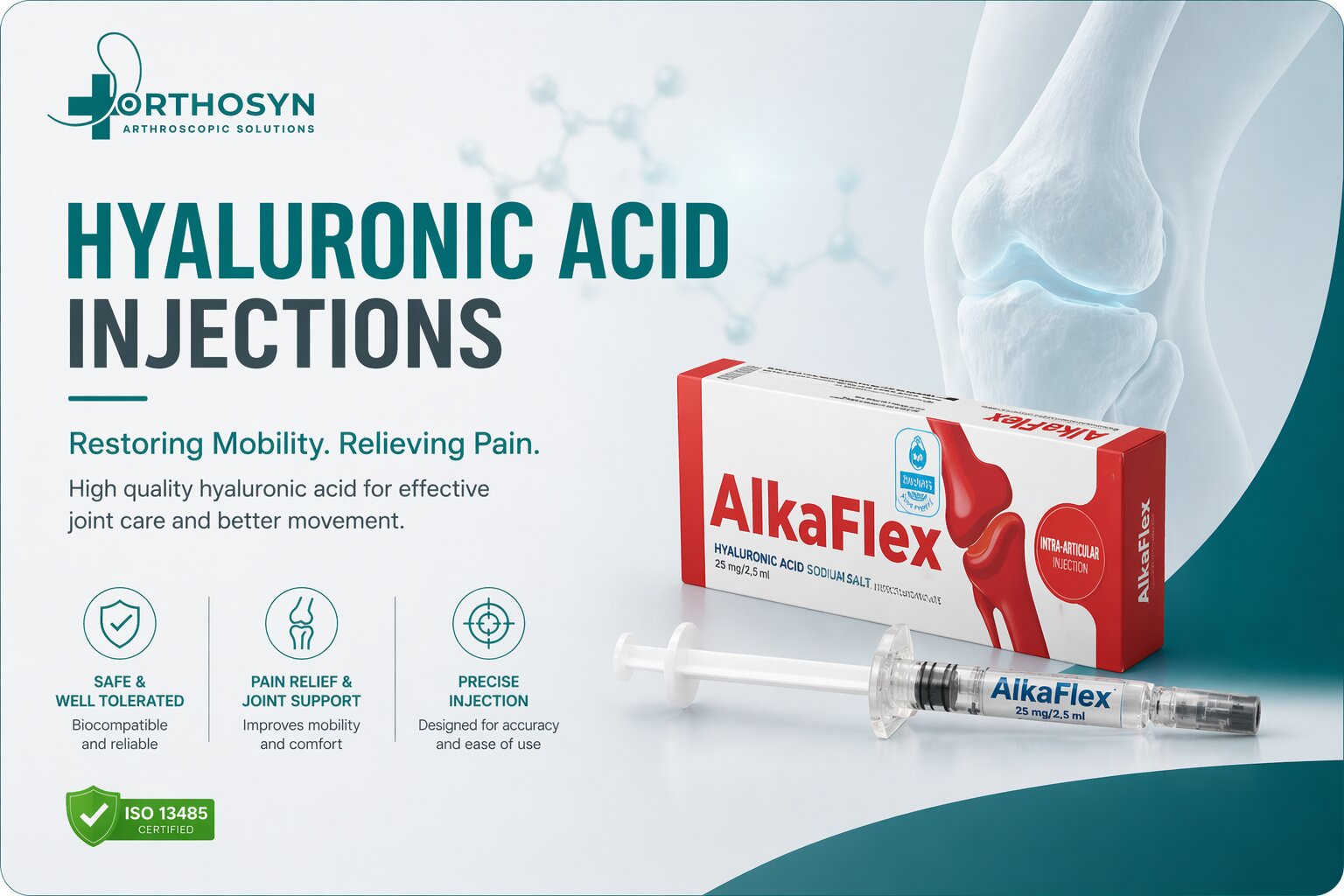
Orthosyn Medikal offers a comprehensive portfolio of sterile intra-articular hyaluronic acid injections developed for different stages of joint degeneration.
The portfolio includes:
Manufactured through microbial fermentation under strict quality standards, Orthosyn products are designed to support joint lubrication, mobility, and patient comfort.
Hyaluronic acid injections cannot eliminate the need for knee replacement in every patient. However, for carefully selected individuals with mild or moderate osteoarthritis, they may help reduce symptoms, improve function, and postpone surgery while maintaining an active lifestyle.
Patients should always consult a qualified healthcare professional to determine the most appropriate treatment strategy based on their individual condition.