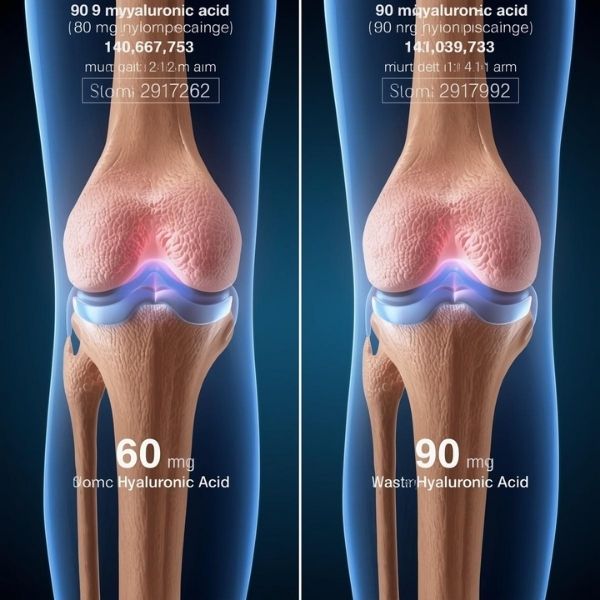
Hyaluronic acid (HA) injections are widely used to support patients experiencing knee osteoarthritis and other degenerative joint conditions. One of the most common questions patients ask is, "How long does hyaluronic acid stay inside the joint?"
The answer is more complex than simply measuring how long the injected material remains in the joint. Although the injected hyaluronic acid gradually breaks down over time, its clinical benefits may continue well beyond its physical presence. Understanding this distinction helps patients develop realistic expectations about treatment outcomes.
After intra-articular injection, hyaluronic acid mixes with the existing synovial fluid inside the joint.
Its immediate functions include:
These mechanical effects begin shortly after administration and may contribute to improved joint comfort.
No.
Like naturally occurring hyaluronic acid, injected HA is gradually metabolized by the body.
The exact residence time depends on several factors, including:
Cross-linked formulations generally remain in the joint longer than non-cross-linked products because their molecular structure is more resistant to enzymatic degradation.
Interestingly, patients often experience symptom relief long after most of the injected HA has been naturally degraded.
Researchers believe this may be related to several biological mechanisms, including:
Although the exact mechanisms continue to be studied, many patients report symptom improvement lasting several months.
Several variables influence how long patients may experience clinical benefits.
Cross-linked formulations are generally designed for greater durability, while non-cross-linked formulations may have shorter residence times.
Patients with early or moderate osteoarthritis may respond differently compared to those with advanced cartilage degeneration.
Maintaining appropriate activity levels while avoiding excessive joint overload may help support long-term treatment outcomes.
Age, body weight, metabolism, overall health, and joint condition all contribute to treatment response.
Although results vary between individuals, many patients experience symptom improvement for several months following treatment.
Healthcare providers determine the most appropriate treatment schedule according to:
Repeat injections should always be performed according to clinical recommendations.
Orthosyn Medikal offers a complete range of sterile intra-articular hyaluronic acid injections developed for different clinical indications.
The portfolio includes:
Manufactured through microbial fermentation and produced under strict quality standards, Orthosyn products are designed to provide reliable joint supplementation while supporting patient comfort and mobility.
The duration of hyaluronic acid treatment extends beyond the time the product physically remains inside the joint. While injected HA is naturally degraded over time, many patients continue to experience improvements in pain, mobility, and joint function for several months.
Discussing treatment expectations with a qualified healthcare professional remains the best way to determine whether hyaluronic acid therapy is appropriate for each individual.