Shoulder arthroscopy has evolved significantly over the past decade, with continuous innovations aimed at improving surgical efficiency while maintaining reliable fixation. One of the most notable developments is the introduction of self-punching suture anchors, which simplify implantation by combining bone preparation and anchor insertion into a single step.
These systems are increasingly used in procedures such as rotator cuff repair, labral repair, and shoulder instability surgery because they help streamline the surgical workflow without compromising fixation strength.
A self-punching anchor is designed to penetrate bone directly without requiring a separate punch or drill in many clinical situations.
Unlike conventional anchors that often require multiple preparation steps, self-punching systems allow the surgeon to create the insertion site and implant the anchor using the same instrument.
This approach can simplify the procedure while reducing the number of instruments needed.
By eliminating the need for separate bone preparation instruments, self-punching anchors simplify the implantation process.
Using fewer instruments may improve operating room workflow and reduce interruptions during surgery.
Simplified implantation can contribute to shorter procedure times, particularly in high-volume arthroscopic practices.
Modern self-punching systems are designed to provide controlled insertion and reproducible positioning.
When used correctly, self-punching anchors provide secure fixation suitable for a wide range of soft tissue repair procedures.
Self-punching anchors are widely used in:
Their versatility makes them valuable tools in modern shoulder arthroscopy.
Although self-punching technology offers many advantages, implant selection should always consider:
Choosing the appropriate anchor remains an important part of successful arthroscopic repair.
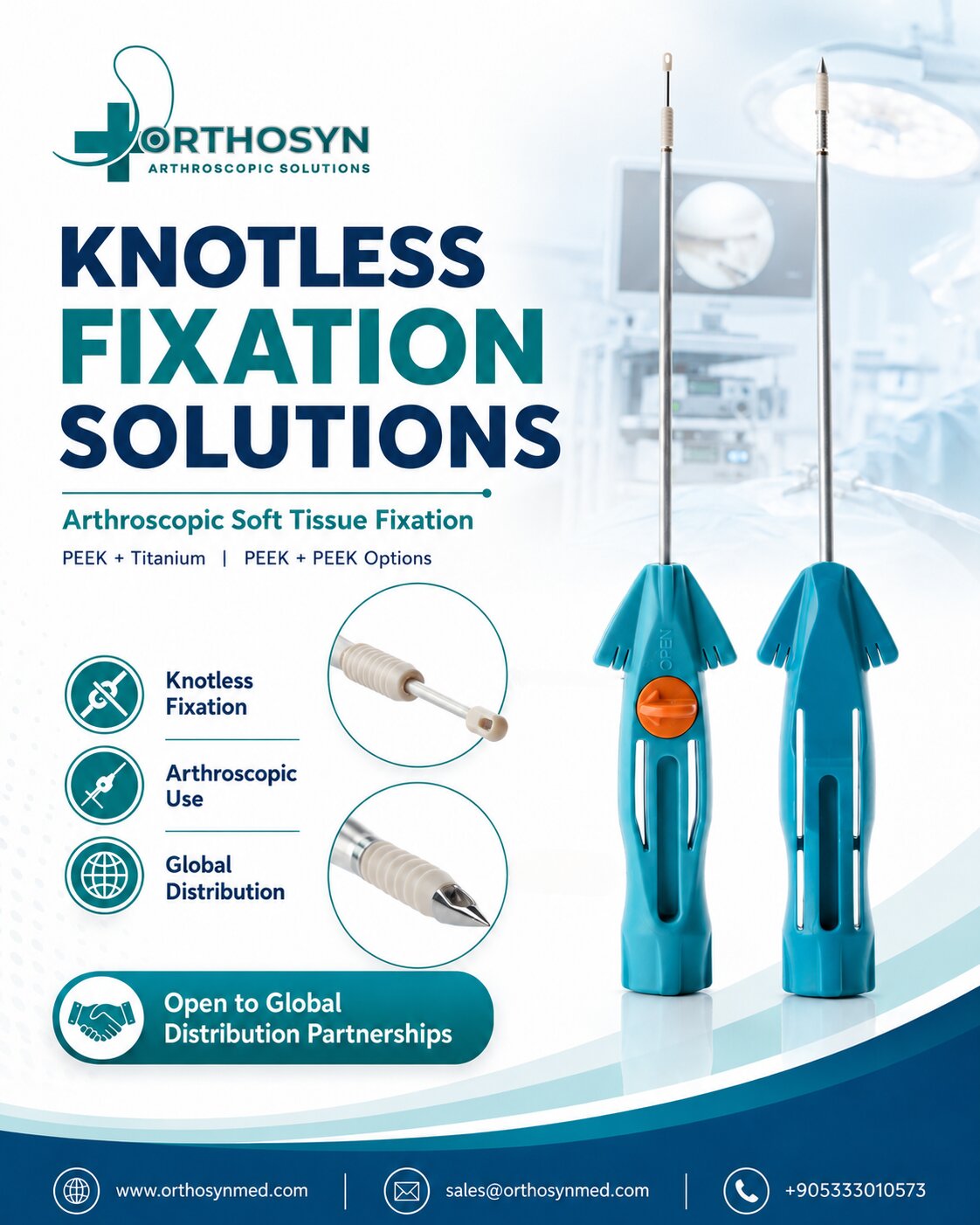
Orthosyn Medikal offers Knotless Self-Punching Anchor Systems designed for modern arthroscopic shoulder procedures.
These systems combine simplified implantation with reliable fixation and are developed to support efficient surgical workflows while minimizing unnecessary procedural steps.
Together with Orthosyn's portfolio of soft anchors, PEEK anchors, and titanium anchors, surgeons can choose the fixation system that best matches each clinical indication.
Self-punching anchors represent an important advancement in arthroscopic shoulder surgery by simplifying implantation and improving surgical efficiency.
By reducing procedural steps and minimizing instrument exchanges, these systems help optimize workflow while maintaining secure soft tissue fixation.
As arthroscopic techniques continue to evolve, self-punching technology is expected to remain an integral part of modern shoulder reconstruction.