serve different clinical purposes.
Understanding these differences helps physicians and patients make informed treatment decisions based on individual needs.
Corticosteroid injections are anti-inflammatory treatments designed to rapidly reduce inflammation inside the joint.
They are commonly used when patients experience:
Their primary goal is to provide short-term symptom relief by reducing inflammation.
Hyaluronic acid injections are part of a treatment approach known as viscosupplementation.
Instead of targeting inflammation directly, hyaluronic acid aims to restore the lubricating and shock-absorbing properties of synovial fluid.
Potential benefits include:
Although both treatments may reduce pain, they achieve this through completely different biological mechanisms.
Corticosteroid injections often provide relatively rapid symptom relief, particularly during episodes of acute inflammation.
Hyaluronic acid injections may take longer before noticeable improvement occurs, but symptom relief can often be maintained for a longer period in appropriately selected patients.
Individual results vary depending on the patient's condition and clinical characteristics.
May be appropriate for patients with:
May be considered for patients with:
Treatment selection should always be based on a physician's clinical evaluation.
In some clinical situations, physicians may incorporate both treatment approaches into a broader management strategy.
The sequence, timing, and appropriateness of each treatment depend on the patient's diagnosis, symptoms, and overall treatment goals.
Any decision should be made by the treating orthopedic specialist.
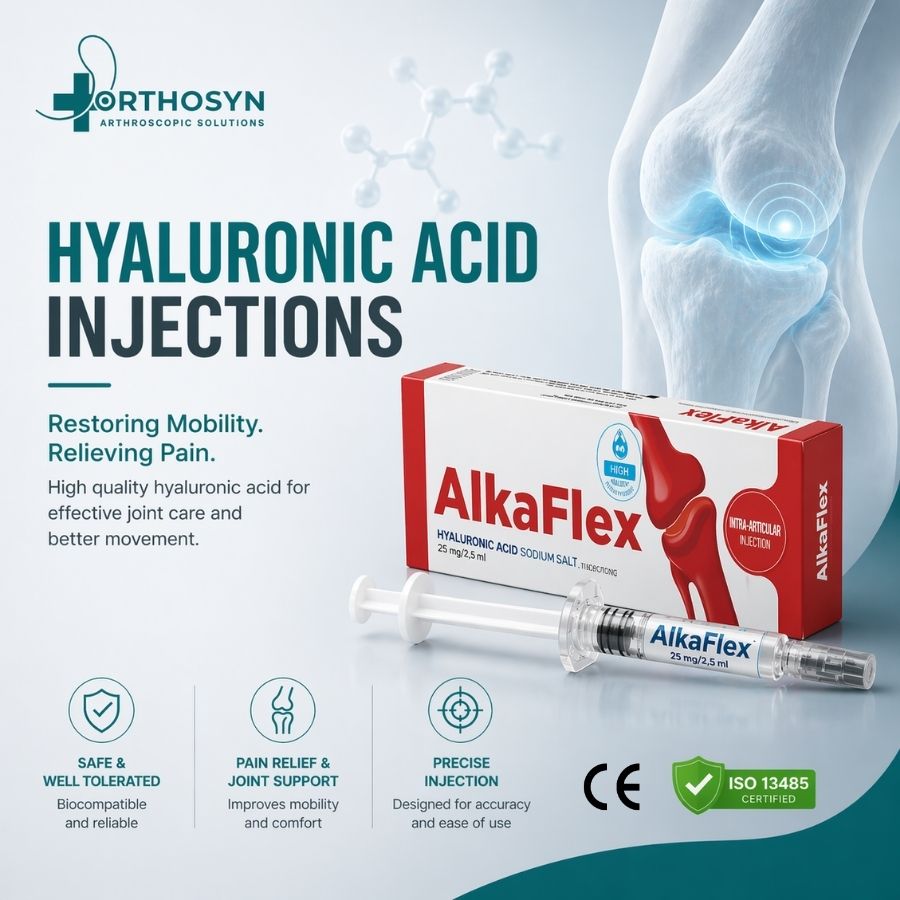
Orthosyn Medikal offers a complete portfolio of intra-articular hyaluronic acid injections developed for viscosupplementation.
Available in both cross-linked and non cross-linked formulations, Orthosyn products are designed to improve joint lubrication, support mobility, and contribute to conservative osteoarthritis management.
Multiple concentrations are available to address different clinical requirements and physician preferences.
Both corticosteroid and hyaluronic acid injections play valuable roles in managing knee osteoarthritis.
Corticosteroids are primarily used for rapid control of inflammation, while hyaluronic acid focuses on restoring joint lubrication and supporting long-term joint function.
Rather than competing therapies, they represent different treatment options that may be selected according to each patient's clinical condition and therapeutic objectives.