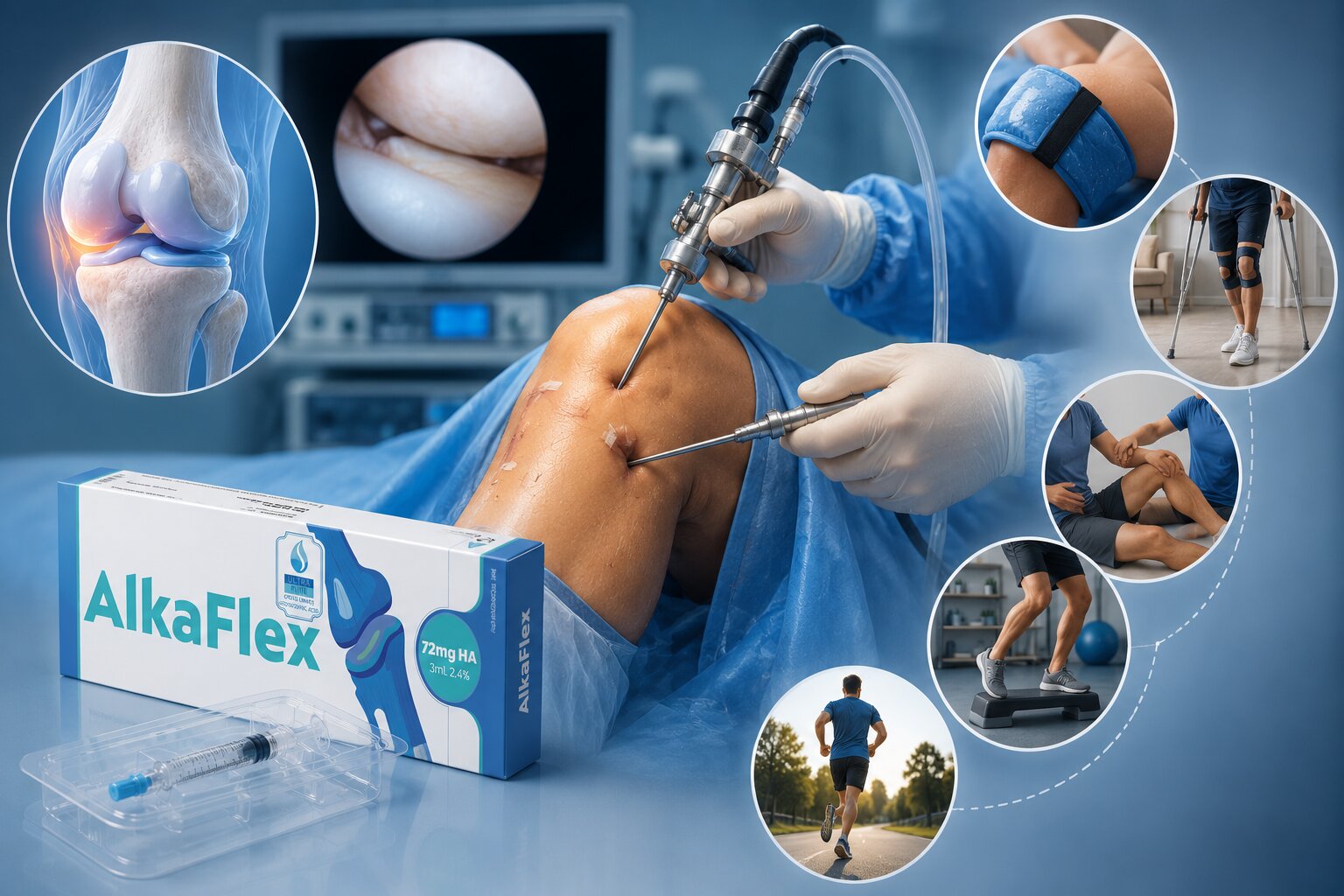
orts-related joint injuries are common among both professional athletes and recreationally active individuals. Acute trauma, repetitive loading, or overuse may affect the cartilage, synovial membrane, ligaments, or surrounding soft tissues, often leading to pain, swelling, and reduced joint function.
Although rehabilitation remains the cornerstone of recovery, intra-articular hyaluronic acid injections have gained increasing attention as part of a comprehensive treatment strategy for selected patients.
Rather than repairing damaged tissue directly, hyaluronic acid aims to restore the biological environment of the joint and improve its mechanical function during recovery.
Following a sports injury, several changes may occur inside the joint:
Even when no severe cartilage damage is present, these changes can negatively affect rehabilitation and delay a patient's return to activity.
Hyaluronic acid is a naturally occurring component of healthy synovial fluid.
Its primary functions include:
Following injury, restoring these properties may contribute to a more favorable joint environment.
Although treatment decisions should always be individualized, hyaluronic acid injections may provide several potential benefits.
Restoring the viscoelastic properties of synovial fluid may help reduce friction during movement.
Improved joint function may help patients participate more comfortably in physical therapy programs.
Reducing stiffness may facilitate gradual restoration of range of motion.
Hyaluronic acid may be considered as part of a non-surgical treatment plan before more invasive interventions are required.
Depending on physician assessment, hyaluronic acid injections may be considered for patients with:
Treatment should always follow a complete orthopedic evaluation.
It is important to understand that hyaluronic acid injections:
Instead, they aim to improve the intra-articular environment while the body's natural healing processes continue.
Orthosyn Medikal offers a comprehensive portfolio of intra-articular hyaluronic acid injections for viscosupplementation.
Available in both cross-linked and non cross-linked formulations, Orthosyn products are developed to support joint lubrication, improve mobility, and assist physicians in conservative joint management strategies.
Multiple concentrations are available to address different clinical needs and treatment preferences.
Recovery after sports injuries requires a comprehensive treatment approach that combines accurate diagnosis, rehabilitation, activity modification, and appropriate medical management.
Hyaluronic acid injections may contribute to symptom relief and improved joint function in selected patients by restoring lubrication and supporting the mechanical environment of the joint.
When incorporated into an individualized treatment plan, viscosupplementation can become a valuable component of modern sports medicine.