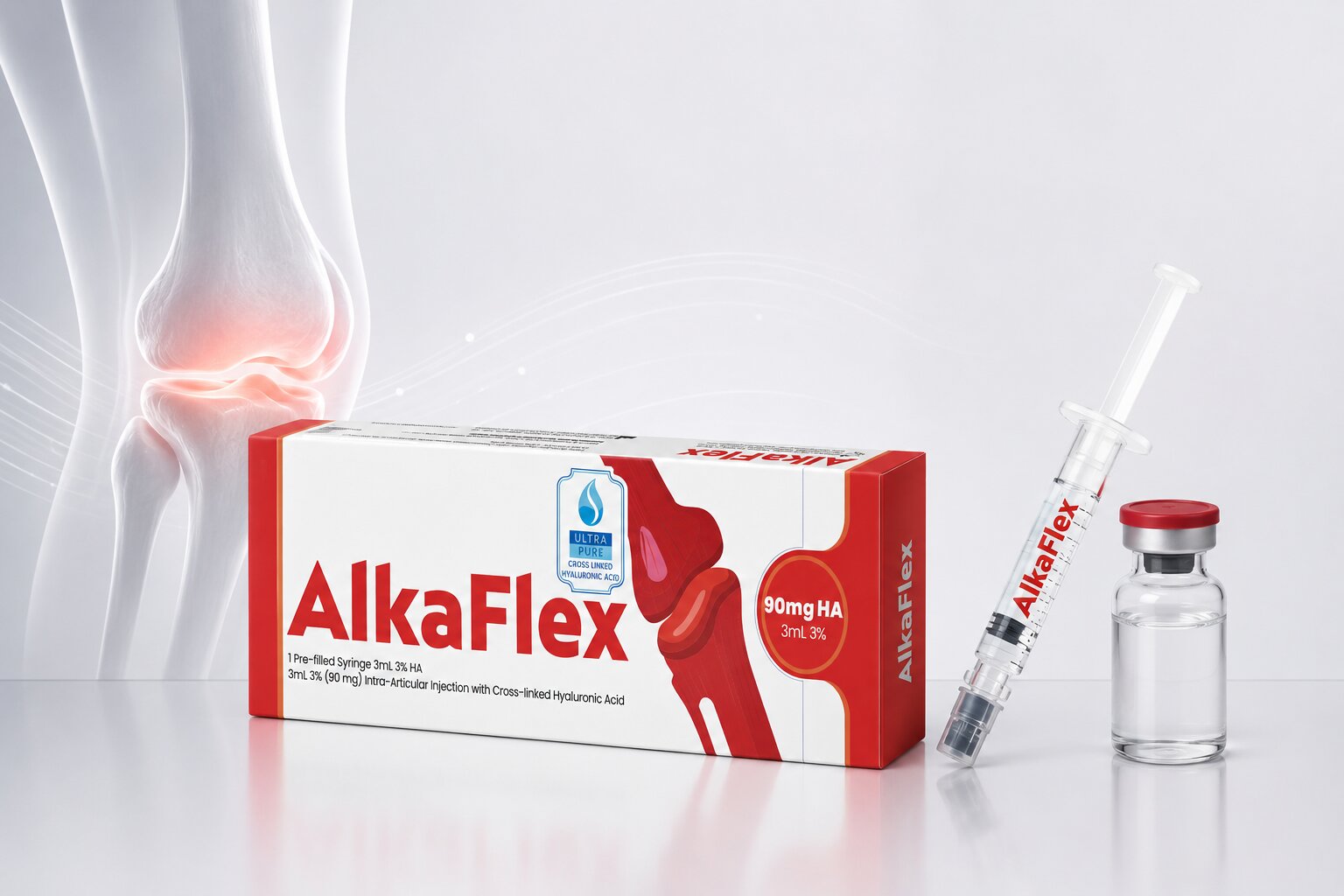
Hyaluronic acid injections have become one of the most widely used non-surgical treatment options for patients suffering from knee osteoarthritis and chronic joint pain.
One of the most common questions patients ask before treatment is:
"How long will the injection last?"
The answer depends on several factors, including the type of hyaluronic acid used, the severity of osteoarthritis, patient activity level, body weight, and overall joint condition.
While every patient responds differently, understanding the factors that influence treatment duration can help set realistic expectations.
Hyaluronic acid is a naturally occurring substance found within healthy synovial fluid.
Its primary functions include:
As osteoarthritis develops, the concentration and quality of natural hyaluronic acid decrease.
This reduction contributes to:
Hyaluronic acid injections aim to restore the lubricating properties of synovial fluid and improve joint function.
Unlike corticosteroid injections, hyaluronic acid does not typically provide immediate relief.
Most patients begin noticing improvement within:
Some patients experience earlier improvement, while others may require additional time before symptoms begin to decrease.
The onset of action depends on:
Clinical studies have reported varying durations of symptom relief.
In many patients, benefits may last:
This is the most commonly reported treatment duration.
Some patients experience longer-lasting relief, particularly when higher molecular weight or cross-linked formulations are used.
Although less common, certain patients report meaningful symptom improvement lasting beyond one year.
Results vary significantly between individuals.
Several variables affect how long treatment benefits may persist.
Different formulations may behave differently inside the joint.
Often provides excellent lubrication but may be broken down more rapidly.
Designed to resist degradation and remain inside the joint for longer periods.
This may contribute to extended clinical benefit.
Patients with mild or moderate osteoarthritis often respond more favorably than those with advanced joint degeneration.
Earlier intervention may improve outcomes.
Excess body weight increases mechanical stress on the knee.
Higher loading forces may influence treatment duration.
Moderate physical activity can support joint health.
However, excessive high-impact activities may accelerate symptom recurrence.
Factors such as:
may affect treatment success and longevity.
Yes.
Hyaluronic acid injections are commonly repeated when symptoms return.
Many physicians recommend repeat treatment based on:
Repeat injections are widely used in osteoarthritis management worldwide.
Not necessarily.
Treatment duration depends on multiple factors, including:
Higher concentration alone does not guarantee longer symptom relief.
Both approaches are commonly used.
Advantages:
Advantages:
The choice depends on physician preference and product design.
Orthosyn Medikal offers a range of viscosupplementation products designed for modern osteoarthritis management.
Available formulations include:
Both cross-linked and non cross-linked options are available depending on clinical requirements.
These products are developed to support long-lasting joint lubrication and improved mobility.
The duration of symptom relief following a hyaluronic acid injection varies between patients.
Many individuals experience improvement for 3 to 6 months, while others may benefit for 6 to 12 months or longer.
Factors such as formulation type, osteoarthritis severity, activity level, and overall joint health all influence treatment outcomes.
For many patients, hyaluronic acid injections remain an effective non-surgical option for managing osteoarthritis symptoms and maintaining quality of life.