Rotator cuff repair is one of the most frequently performed arthroscopic shoulder procedures worldwide. Advances in arthroscopic instrumentation, suture anchors, fixation systems, and surgical techniques have significantly improved clinical outcomes over the past two decades.
Despite these advancements, repair failure can still occur. While patient-related factors such as age, tissue quality, and tear size play an important role, technical errors during surgery remain a major contributor to unsuccessful outcomes.
Understanding common mistakes and implementing strategies to avoid them can improve tendon healing, repair strength, and long-term patient satisfaction.
The rotator cuff consists of four muscles and their tendons:
These structures work together to stabilize and move the shoulder.
Rotator cuff tears may result from:
The goal of surgery is to restore tendon attachment to its anatomical footprint on the humerus.
One of the most common technical errors is insufficient preparation of the greater tuberosity footprint.
The tendon must heal directly to bone.
Poor preparation may result in:
Proper use of:
can help create a bleeding bone surface that supports biological healing.
Anchor positioning directly affects repair stability.
Anchors placed too medially or too laterally may:
Preoperative planning and accurate arthroscopic visualization are essential.
Surgeons should ensure anchors are positioned to maximize tendon-to-bone contact while maintaining proper tissue tension.
Not all rotator cuff tears are the same.
Failure to evaluate tissue quality can lead to:
Assess:
before selecting fixation techniques.
Attempting to pull a severely retracted tendon back to its footprint under excessive tension may compromise healing.
High-tension repairs may increase:
Consider:
when necessary.
Arthroscopic shoulder procedures often involve multiple anchors and sutures.
Poor suture management may result in:
Maintain a systematic approach to:
throughout the procedure.
Different tears may require different fixation solutions.
Factors influencing anchor selection include:
Useful when minimal bone removal is desired.
Provide strong fixation and excellent MRI compatibility.
Offer excellent mechanical stability and long-term clinical history.
Simplify procedures and eliminate knot stacks.
Anchor fixation depends heavily on bone quality.
Poor bone stock may increase the risk of:
Careful preoperative assessment and appropriate anchor selection are essential.
Different tear configurations require different repair strategies.
Common patterns include:
Failure to recognize tear geometry can compromise repair mechanics.
Large tears often require mobilization before fixation.
Attempting repair without adequate release may create excessive tension.
Ensure sufficient mobility before anchor placement and final fixation.
Even a technically perfect repair may fail without appropriate rehabilitation.
Postoperative protocols commonly include:
Successful outcomes depend on both surgery and rehabilitation.
Successful rotator cuff repair relies on proper instrumentation.
Common instruments include:
These tools help surgeons perform precise arthroscopic repairs.
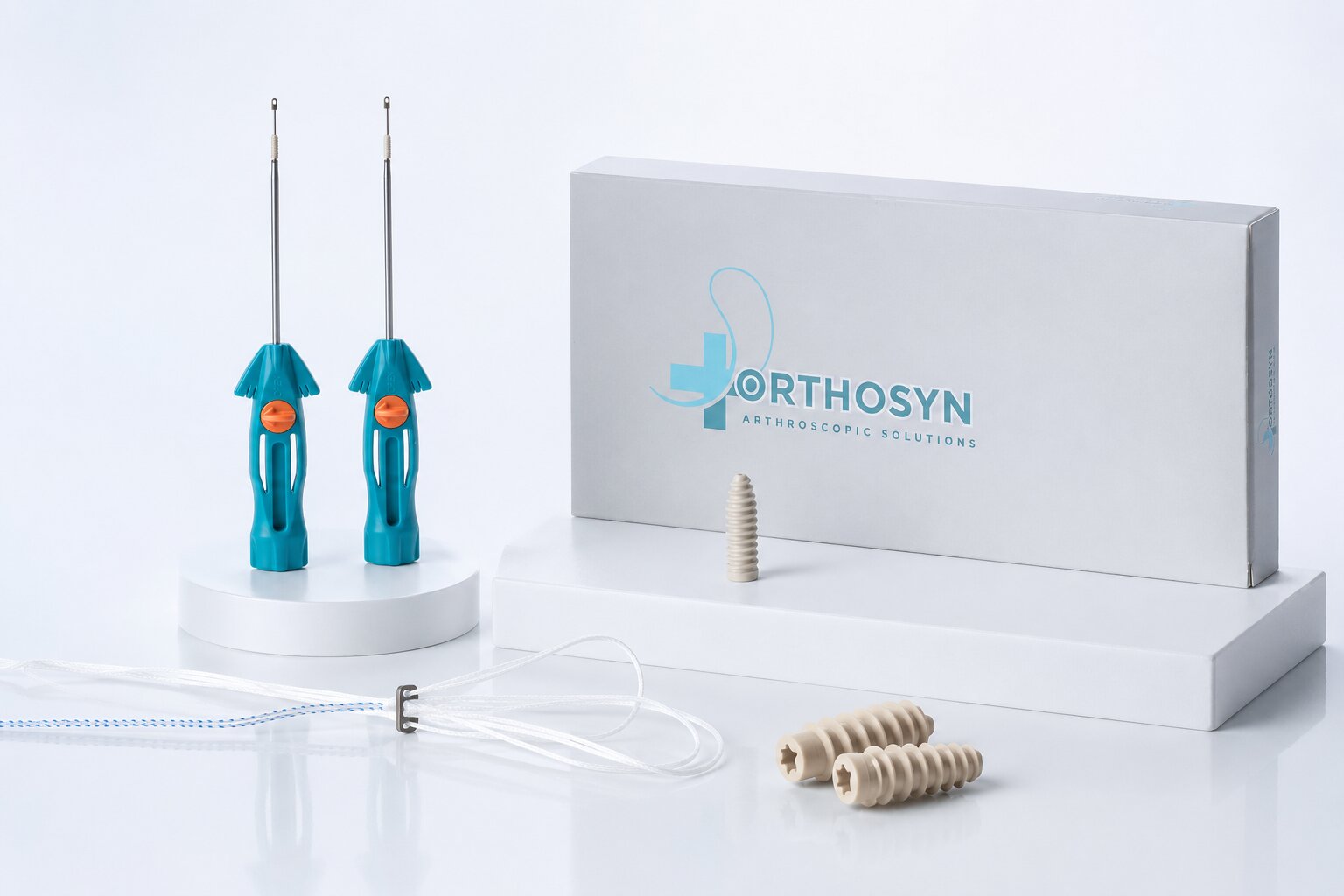
Orthosyn Medikal offers arthroscopic shoulder solutions including:
Designed to support modern rotator cuff repair techniques and reliable fixation.
Rotator cuff repair success depends on careful planning, proper implant selection, accurate anchor placement, and meticulous surgical technique.
Avoiding common technical mistakes can improve tendon healing, reduce re-tear rates, and enhance long-term clinical outcomes.
As arthroscopic technology continues to evolve, combining advanced implants with sound surgical principles remains the foundation of successful shoulder reconstruction.