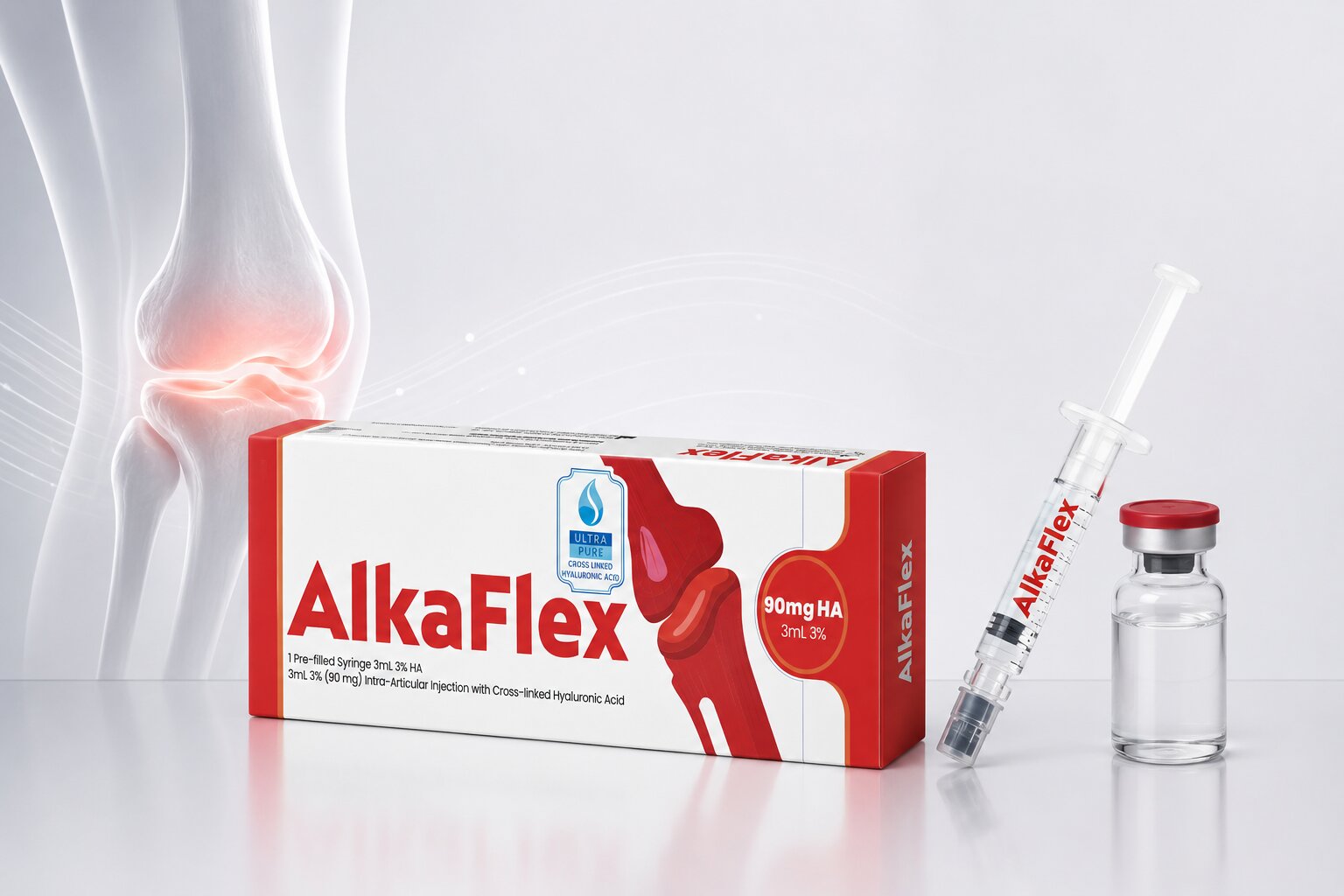
Knee osteoarthritis is one of the most common degenerative joint diseases affecting millions of patients worldwide. As cartilage degeneration progresses, patients often experience pain, stiffness, swelling, and reduced mobility.
Hyaluronic acid injections have become one of the most widely used non-surgical treatment options for managing osteoarthritis symptoms and improving joint function.
However, many physicians, distributors, and patients ask the same question:
Which hyaluronic acid injection is best for knee osteoarthritis?
The answer depends on several factors including molecular structure, concentration, cross-linking technology, viscosity, injection protocol, and patient condition.
This guide explains the key characteristics that define high-quality hyaluronic acid injections for orthopedic viscosupplementation.
Osteoarthritis is a progressive degenerative disease affecting cartilage and synovial fluid inside the joint.
As degeneration progresses:
The knee joint is especially vulnerable because it carries body weight and repetitive mechanical stress.
Hyaluronic acid is naturally present in healthy synovial fluid.
Its functions include:
In osteoarthritis patients, HA concentration and viscosity gradually decrease.
Viscosupplementation aims to restore these properties through intra-articular injection.
Several characteristics influence the quality and performance of a hyaluronic acid injection.
Molecular weight significantly affects viscosity and duration.
Advantages may include:
Advantages may include:
Cross-linked formulations are chemically stabilized to improve durability.
Advantages:
Non cross-linked products may offer:
HA products are available in multiple concentration levels.
Higher concentration products may provide:
Selection depends on patient needs and treatment goals.
HA injections may be designed for:
Single injection systems improve convenience, while multiple injection systems may allow progressive treatment.
High-quality production standards are critical.
Important factors include:
Poor-quality formulations may affect clinical performance and patient safety.
Often preferred when:
Often preferred when:
HA injections are commonly recommended for:
Patients with advanced bone-on-bone degeneration may require additional treatment options.
Potential benefits include:
Results vary depending on patient condition and product selection.
Advantages:
Advantages:
Clinical outcomes also depend on:
Ultrasound-guided injections may improve placement accuracy.
Orthosyn Medikal provides advanced viscosupplementation solutions including:
Designed for modern orthopedic and sports medicine applications.
The best hyaluronic acid injection for knee osteoarthritis depends on patient condition, treatment goals, formulation type, and physician preference. Molecular weight, cross-linking technology, concentration, and manufacturing quality all play important roles in clinical performance.
Modern viscosupplementation solutions continue to provide effective non-surgical treatment options for managing osteoarthritis and improving patient quality of life.