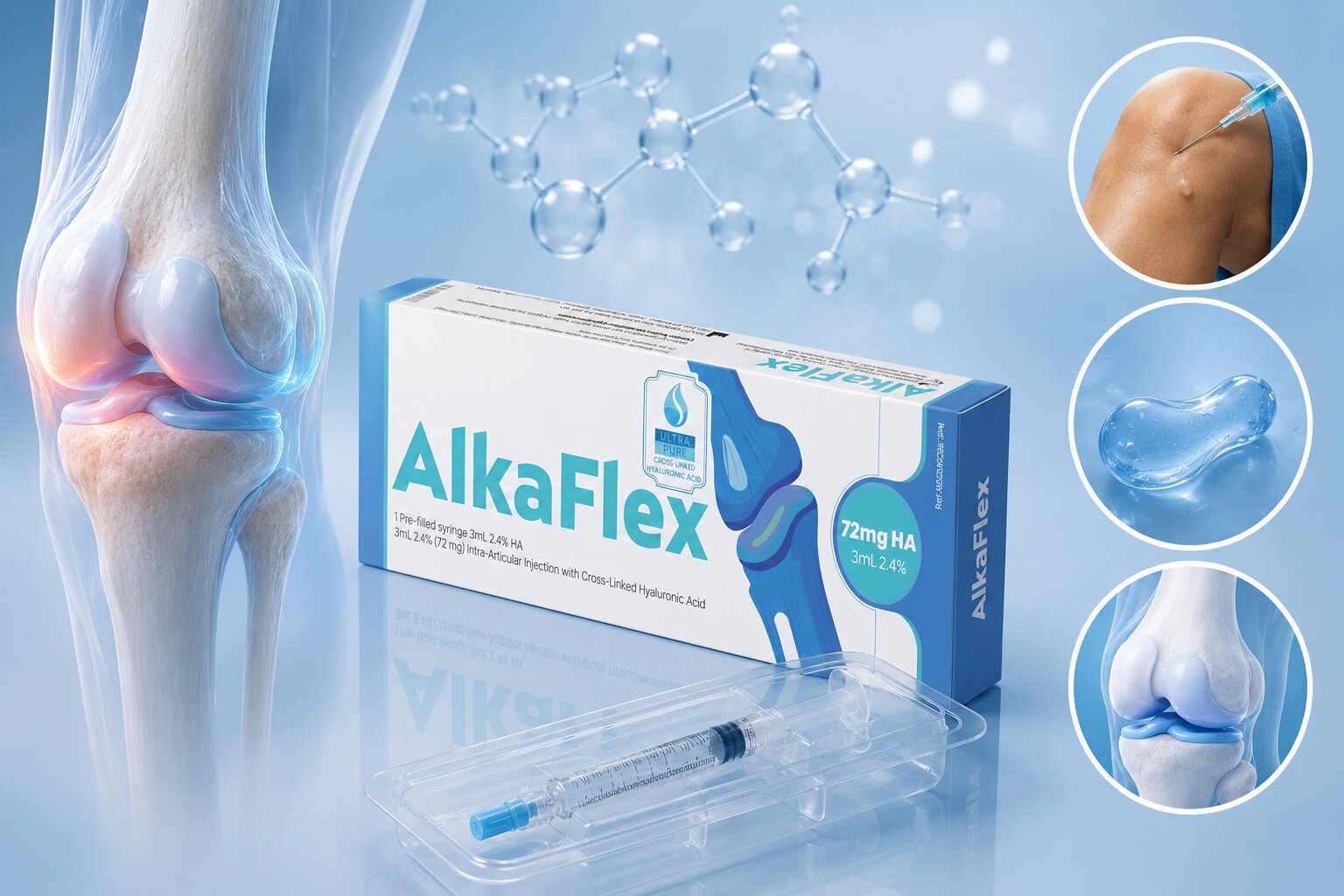
Hyaluronic acid injections are among the most commonly used non-surgical treatments for knee osteoarthritis and joint pain. These injections are designed to improve joint lubrication, reduce pain, and support mobility through a treatment approach called viscosupplementation.
One of the most frequently asked questions by patients is whether hyaluronic acid injections truly work and how effective they are compared to other treatment options.
The answer depends on several factors, including the severity of joint degeneration, product formulation, injection technique, and patient condition.
Osteoarthritis is a degenerative joint disease that gradually damages cartilage inside the knee joint.
As the disease progresses:
This degeneration affects mobility and quality of life.
Hyaluronic acid is naturally present in healthy synovial fluid.
Its primary functions include:
In osteoarthritis patients, natural HA concentration decreases significantly.
Hyaluronic acid injections are administered directly into the joint space.
The treatment aims to:
Some formulations also help reduce inflammation within the joint environment.
HA injections are generally most effective in:
Patients with advanced bone-on-bone osteoarthritis may experience more limited results.
Product formulation plays an important role in treatment performance.
Cross-linked formulations are designed to remain inside the joint longer.
Potential advantages:
Non cross-linked products are closer to natural synovial fluid structure.
Potential advantages:
Patients may experience:
Results are not always immediate. Some patients notice improvement within weeks after injection.
Treatment outcomes depend on:
Ultrasound-guided injections may improve placement accuracy.
HA injections are not a permanent cure for osteoarthritis.
In advanced cases, additional treatments may still be necessary, including:
Hyaluronic acid injections can be an effective solution for many patients with knee osteoarthritis and joint pain, particularly in early and moderate stages of degeneration. Proper patient selection, product choice, and injection technique are critical for successful outcomes.
Orthosyn Medikal provides advanced viscosupplementation solutions designed for modern orthopedic and sports medicine applications.