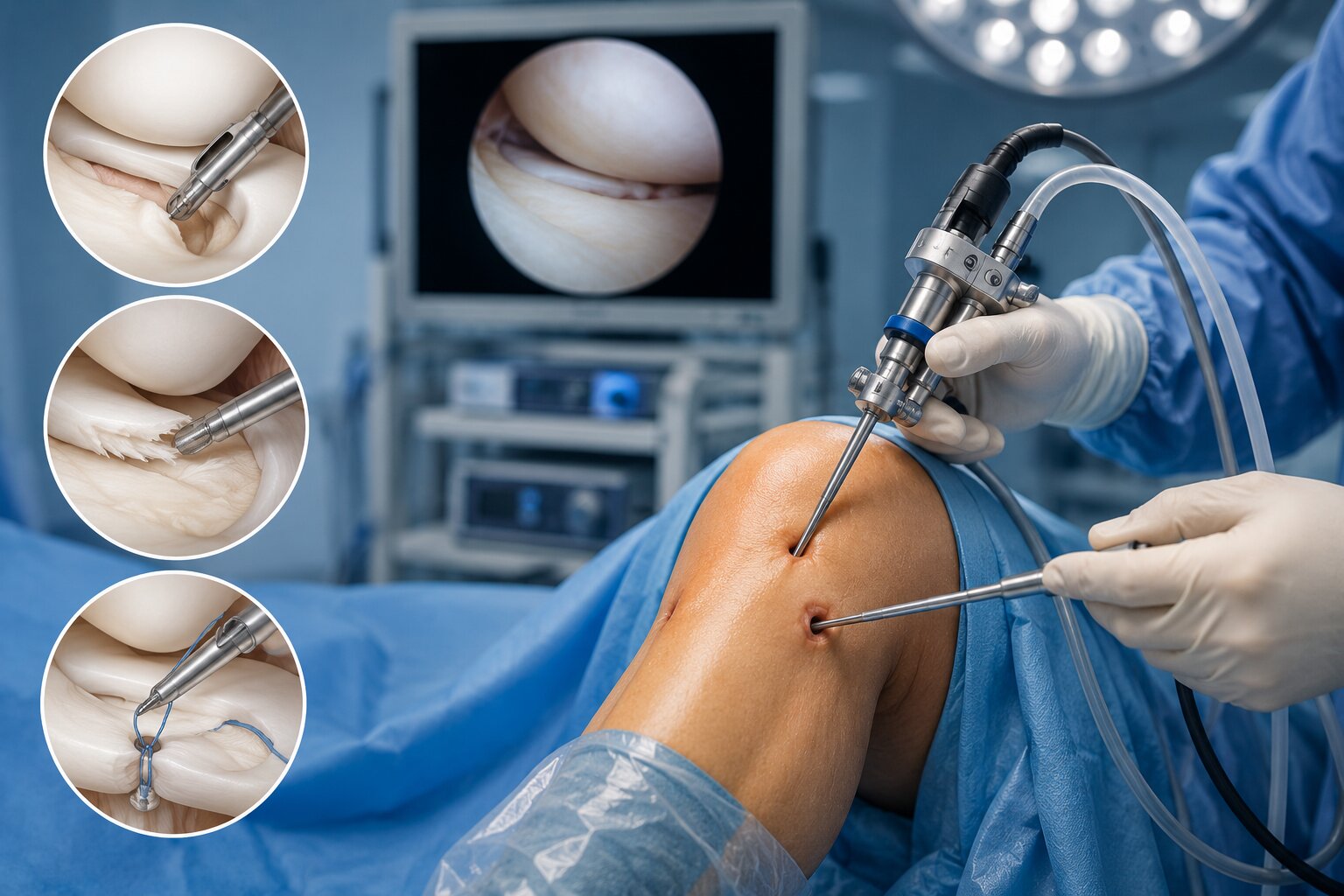
Knee pain is one of the most common orthopedic complaints affecting people of all ages. While many cases can be managed with physical therapy, medication, or injections, some patients may require surgical intervention. Arthroscopy is one of the most widely used minimally invasive procedures for diagnosing and treating knee problems.
Understanding when arthroscopy is needed for knee pain is important for both patients and healthcare professionals.
Knee arthroscopy is a minimally invasive surgical procedure performed using a small camera called an arthroscope and specialized surgical instruments inserted through small incisions around the knee joint.
The procedure allows surgeons to:
Compared to open surgery, arthroscopy causes less tissue damage and generally allows faster recovery.
Knee pain may result from various conditions, including:
Accurate diagnosis is essential before considering surgery.
Arthroscopy may be recommended when conservative treatments fail to relieve symptoms.
Typical indications include:
Meniscus injuries are among the most common reasons for knee arthroscopy. Torn meniscal tissue may cause locking, pain, and instability.
ACL and PCL injuries often require arthroscopic reconstruction to restore knee stability.
Fragments of cartilage or bone inside the joint can cause pain and mechanical locking. Arthroscopy allows removal of these loose bodies.
Localized cartilage defects may be treated arthroscopically using techniques such as microfracture or debridement.
Chronic inflammation inside the joint may require arthroscopic evaluation and synovectomy.
Arthroscopy may not provide significant benefit in advanced osteoarthritis with severe cartilage loss.
In these cases, alternative treatments may include:
Patient selection is critical for successful outcomes.
Advantages include:
Recovery depends on the treated condition and surgical procedure performed.
General recovery considerations:
Some patients return to daily activities within weeks, while ligament reconstruction may require several months of rehabilitation.
Modern knee arthroscopy depends on advanced surgical systems and implants, including:
High-quality instrumentation improves surgical precision and efficiency.
Arthroscopy is an effective minimally invasive solution for many causes of knee pain, especially meniscus tears, ligament injuries, and cartilage problems. Proper diagnosis and patient selection are essential for successful outcomes.
Orthosyn Medikal provides arthroscopy instruments, fixation systems, and orthopedic solutions designed to support modern knee arthroscopy procedures.