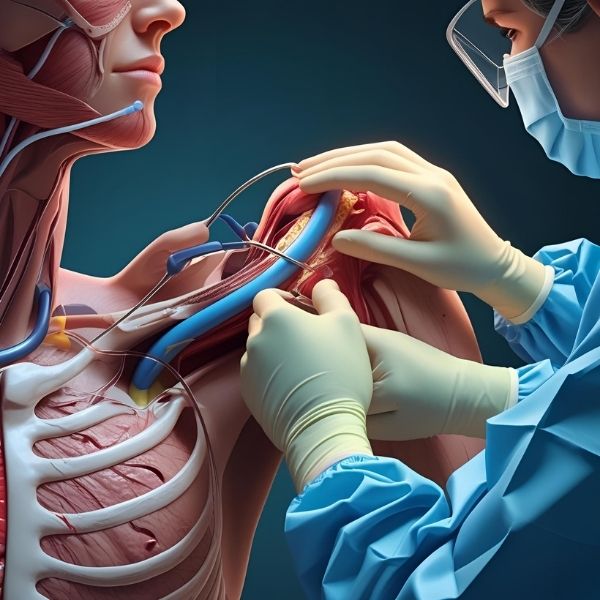
Arthroscopic rotator cuff repair is a minimally invasive surgical procedure used to treat tears of the rotator cuff tendons in the shoulder. It is one of the most commonly performed procedures in orthopedic sports medicine and shoulder surgery.
This technique allows surgeons to restore tendon function, reduce pain, and improve shoulder mobility with minimal tissue damage.
The rotator cuff is a group of muscles and tendons that stabilize the shoulder joint and allow a wide range of motion. Tears can occur due to trauma, degeneration, or repetitive stress.
Common symptoms include:
Arthroscopic rotator cuff repair is typically indicated in:
The patient is positioned in either beach-chair or lateral decubitus position to optimize access to the shoulder joint.
Standard arthroscopic portals are created to access the glenohumeral joint and subacromial space.
The surgeon evaluates the extent of the tear and identifies associated pathologies such as labral or biceps lesions.
The greater tuberosity is prepared using a burr to create a bleeding bone surface for tendon healing.
Suture anchors are placed into the bone to secure the tendon.
Types of anchors used:
Sutures are passed through the torn tendon using suture passers.
The tendon is reattached to the bone using:
Double-row and knotless systems provide increased contact area and stability.
Modern rotator cuff repair relies heavily on advanced implant systems such as suture anchors. The choice of anchor type and fixation technique directly affects surgical success.
Orthosyn Medikal provides a wide range of suture anchor solutions designed for reliable and efficient rotator cuff repair.
Arthroscopic rotator cuff repair is a highly effective procedure when performed with proper technique and appropriate implants. Advances in arthroscopy and fixation systems continue to improve clinical outcomes and patient recovery.