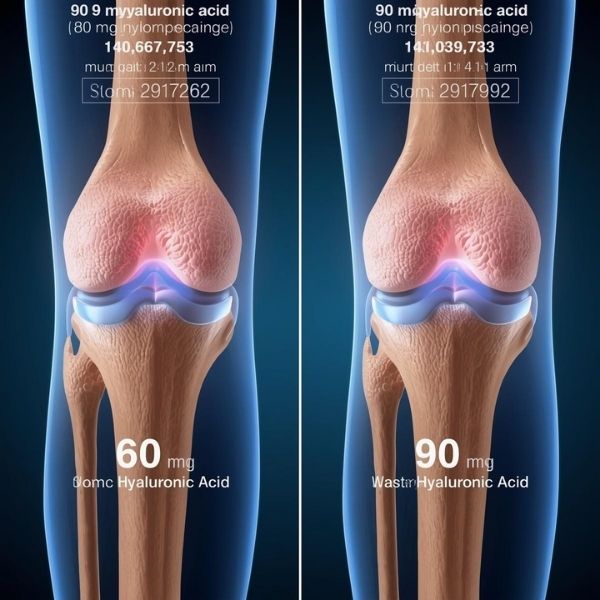
Hyaluronic acid (HA) injections are widely used in the treatment of knee osteoarthritis as part of viscosupplementation therapy. These injections help restore the natural lubrication of the joint, reduce pain, and improve mobility.
One of the most common questions in clinical practice is the difference between 60 mg and 90 mg hyaluronic acid injections and how to choose the appropriate option.
The dosage of hyaluronic acid refers to the total amount of active substance delivered into the joint.
Higher dosage formulations are typically designed to provide extended joint lubrication and longer symptom relief.
90 mg injections generally provide longer-lasting relief compared to 60 mg formulations due to their higher concentration and cross-linked structure.
Higher-dose HA injections tend to have increased viscosity, improving shock absorption and joint lubrication.
This makes higher-dose products more convenient for both patients and clinicians.
High-dose, cross-linked HA formulations are increasingly preferred in modern orthopedic practice.
The choice between 60 mg and 90 mg hyaluronic acid injections depends on:
Both options are effective, but higher-dose injections may provide longer-lasting results with fewer applications.
Hyaluronic acid injections are a safe and effective treatment for knee osteoarthritis. Understanding the difference between 60 mg and 90 mg formulations allows clinicians to tailor treatment to individual patient needs.
Orthosyn Medikal offers advanced cross-linked hyaluronic acid solutions designed to deliver optimal joint performance and patient comfort.