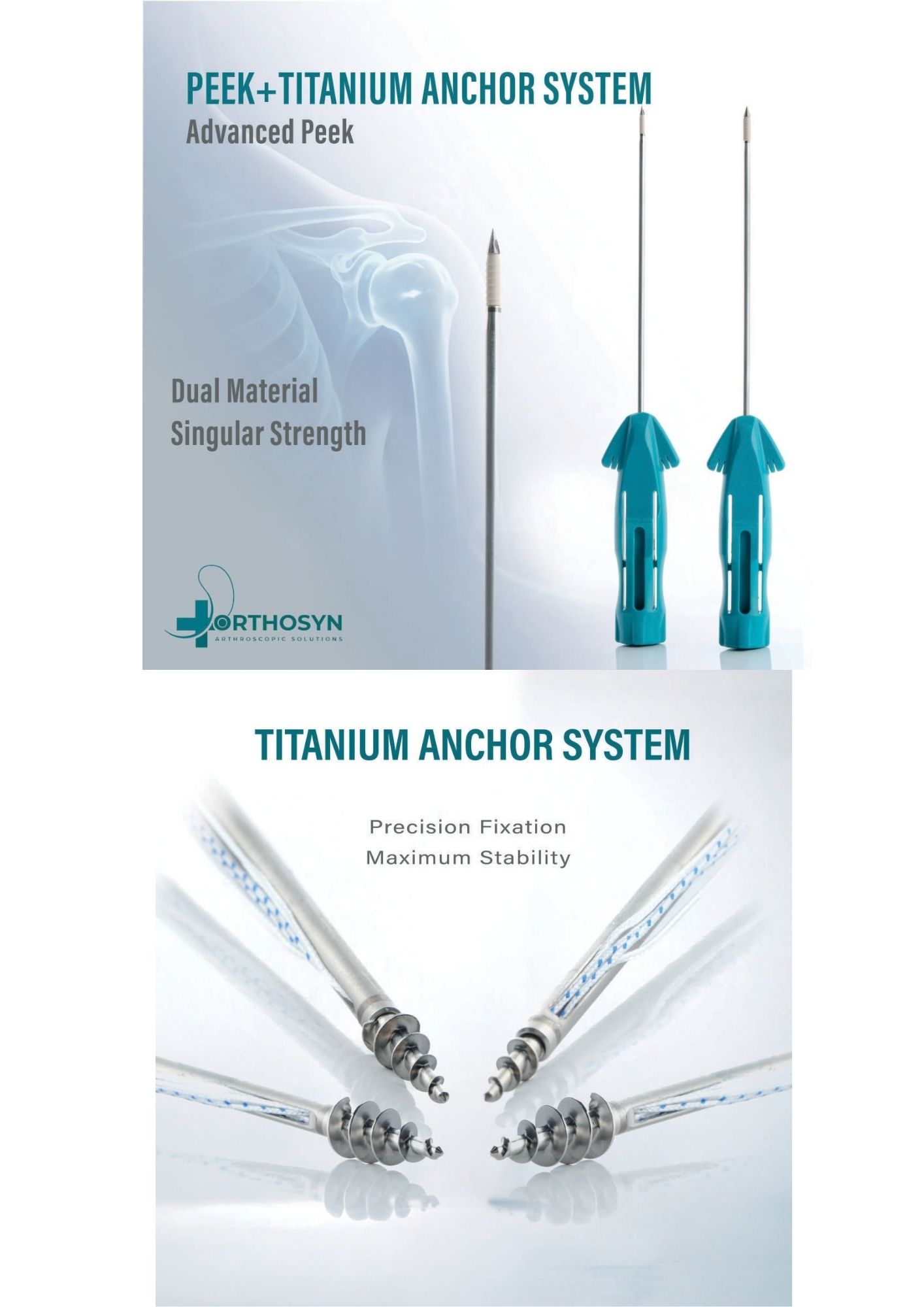
Suture anchors are essential implants used in orthopedic surgery to attach soft tissue such as tendons and ligaments to bone. They are widely used in procedures like rotator cuff repair, labrum repair, and ligament reconstruction.
With advancements in biomaterials, different types of suture anchors are available, primarily categorized as titanium, PEEK, and bioabsorbable anchors. Each type offers unique advantages depending on the surgical indication and patient profile.
Titanium anchors are among the most widely used implants due to their excellent mechanical strength and long-term stability.
Key Advantages:
Considerations:
Titanium anchors are often preferred in cases where strong fixation is critical.
PEEK (Polyether Ether Ketone) anchors are high-performance polymer implants that have gained popularity in orthopedic surgery.
Key Advantages:
Considerations:
PEEK anchors are ideal when imaging clarity and biocompatibility are important.
Bioabsorbable anchors are designed to degrade over time and be replaced by natural bone.
Key Advantages:
Considerations:
These anchors are often used in younger patients and cases requiring long-term biological integration.
Titanium anchors provide maximum strength and long-term stability. PEEK anchors offer imaging advantages and biomechanical compatibility. Bio anchors provide biological integration and eliminate permanent implants.
The choice depends on:
Selecting the appropriate suture anchor material is critical for achieving optimal surgical outcomes. Each anchor type offers specific benefits, and understanding these differences allows surgeons to make informed decisions.
Orthosyn Medikal provides a wide range of suture anchor solutions designed to meet the needs of modern orthopedic surgery.