An ACL injury is often discussed as an isolated ligament problem, but injuries associated with the anterior cruciate ligament can also involve other structures of the knee. One important example is the meniscal ramp lesion, an injury involving the peripheral posterior region of the medial meniscus.
Ramp lesions are particularly relevant in patients undergoing ACL reconstruction because they can coexist with ACL tears and may influence the stability of the knee. For this reason, careful evaluation of the posteromedial compartment and recognition of associated meniscal injuries are important parts of arthroscopic ACL surgery.
A ramp lesion generally refers to a tear involving the peripheral attachment of the posterior horn of the medial meniscus, particularly around the meniscocapsular or meniscotibial region.
Unlike meniscal tears located in areas that are immediately visible during routine arthroscopic inspection, ramp lesions are located in the posteromedial compartment of the knee.
Their anatomical position can make them more difficult to identify during standard anterior arthroscopic visualization.
The ACL and medial meniscus both contribute to knee stability.
When the ACL is injured, abnormal anterior translation and rotational movement of the tibia can increase mechanical stress on the posterior horn of the medial meniscus.
As a result, a ramp lesion may occur together with an ACL tear.
This association is clinically important because treating the ACL without recognizing an associated meniscal injury may leave an additional source of instability or meniscal dysfunction unaddressed.
One of the important characteristics of ramp lesions is their location.
A conventional examination of the knee through standard anterior arthroscopic portals may not always provide complete visualization of the posteromedial meniscocapsular region.
During arthroscopy, the surgeon may therefore evaluate the posterior horn of the medial meniscus more carefully when a ramp lesion is suspected.
Assessment can involve:
Identifying the lesion is the first step in determining whether additional treatment is necessary during ACL reconstruction.
ACL reconstruction is intended to restore functional stability to the knee, but the ACL does not function independently from the surrounding structures.
The medial meniscus acts as an important secondary stabilizer of the knee. A significant unstable ramp lesion may therefore affect the overall biomechanical environment even after ACL reconstruction.
This is why surgeons evaluate associated meniscal pathology when planning and performing ACL reconstruction.
The treatment decision depends on characteristics such as:
Not every identified ramp lesion necessarily requires the same treatment approach.
When surgical repair is indicated, the objective is to approximate and stabilize the separated meniscal tissue so that the injured region can heal.
Different meniscal repair techniques may be selected according to the location and characteristics of the lesion.
These may include:
The choice of technique depends on surgical access, tear configuration and surgeon preference.
An all-inside meniscal repair system allows fixation components and sutures to be delivered arthroscopically without the conventional external suture passage required by some other techniques.
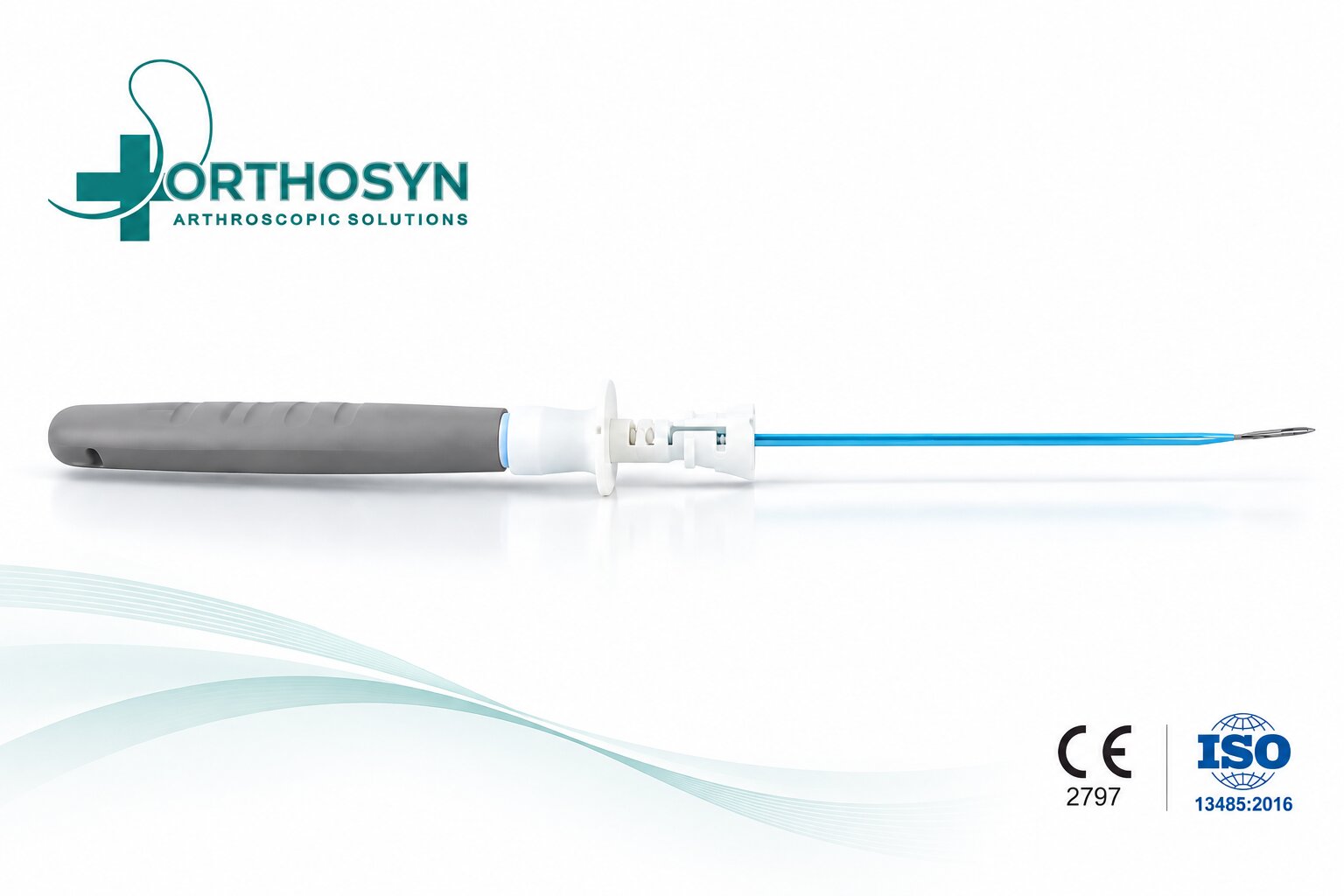
In appropriate meniscal repair procedures, devices such as the ORTHOSYN VersaFix Meniscal Repair System provide an all-inside fixation option.
VersaFix incorporates:
For posterior meniscal repair, controlled insertion depth is particularly relevant because of the anatomy surrounding the posterior aspect of the knee.
The selection of the repair technique and device must ultimately depend on the anatomy and characteristics of the individual lesion.
Ramp lesions are a good example of why ACL reconstruction should not be considered only as an isolated ligament fixation procedure.
An ACL reconstruction may involve several stages and product groups, including:
ACL Reconstruction
→ Femoral tunnel preparation
→ Graft passage
→ Femoral cortical fixation
→ Tibial fixation
→ Assessment of associated meniscal injuries
When a repairable meniscal lesion is identified
→ Meniscal preparation
→ Implant or suture placement
→ Tissue approximation
→ Meniscal fixation
ORTHOSYN provides products associated with both areas of arthroscopic knee reconstruction, including femoral cortical fixation systems, interference screws, ligament reconstruction instruments and the VersaFix Meniscal Repair System.
The menisci contribute to several important functions within the knee, including load distribution, shock absorption, joint congruity and stability.
For suitable tears, meniscal repair aims to preserve functional meniscal tissue rather than removing it.
This makes recognition of associated meniscal injuries particularly relevant in younger and active patients undergoing ACL reconstruction.
A meniscal ramp lesion is an injury involving the peripheral posterior region of the medial meniscus and is particularly important because of its association with ACL tears.
Its posteromedial location can make detection more challenging during routine arthroscopic visualization, making careful inspection of the medial meniscus an important consideration during ACL reconstruction.
When a ramp lesion is identified, its stability, size, location and tissue characteristics help determine the appropriate management strategy. When repair is indicated, arthroscopic meniscal repair techniques—including all-inside fixation systems—can be used to stabilize the injured tissue.
Understanding ramp lesions therefore connects two important areas of arthroscopic knee surgery: ACL reconstruction and meniscal preservation.