Suture anchors are widely used in arthroscopic soft tissue repair to provide a fixation point between soft tissue and bone. While anchor material, fixation mechanism and suture configuration are important considerations, suture anchor diameter is another fundamental design characteristic.
The diameter of an anchor directly influences the size of the bone tunnel required for implantation. This makes anchor size particularly relevant when surgeons need to preserve bone stock or position multiple anchors within a limited anatomical area.
In general, a smaller-diameter anchor requires a smaller bone tunnel.
Reducing the diameter of the prepared tunnel means that less bone needs to be removed during anchor placement. This can be particularly relevant in arthroscopic procedures where available bone stock is limited.
Small-diameter anchors may therefore provide an option when the surgical objective includes minimizing the bone footprint required for fixation.
Some arthroscopic soft tissue repairs require several fixation points.
As the number of anchors increases, the position and spacing between bone tunnels become important considerations. Smaller anchor diameters can allow fixation points to be established while requiring less bone volume for each individual tunnel.
This may be useful in anatomically constrained areas or procedures requiring multiple anchor placements.
A smaller anchor should not automatically be interpreted as a better anchor.
Anchor selection depends on several factors, including:
The appropriate anchor diameter therefore depends on the requirements of the specific repair.
All-suture or soft anchor designs represent one approach to reducing the size of the bone tunnel required for anchor placement.
Unlike conventional solid-body anchors, soft anchors use a flexible implant component that is deployed within the prepared bone tunnel to create fixation.
This design allows soft anchors to be manufactured in relatively small diameters while maintaining a suture-based fixation platform for arthroscopic procedures.
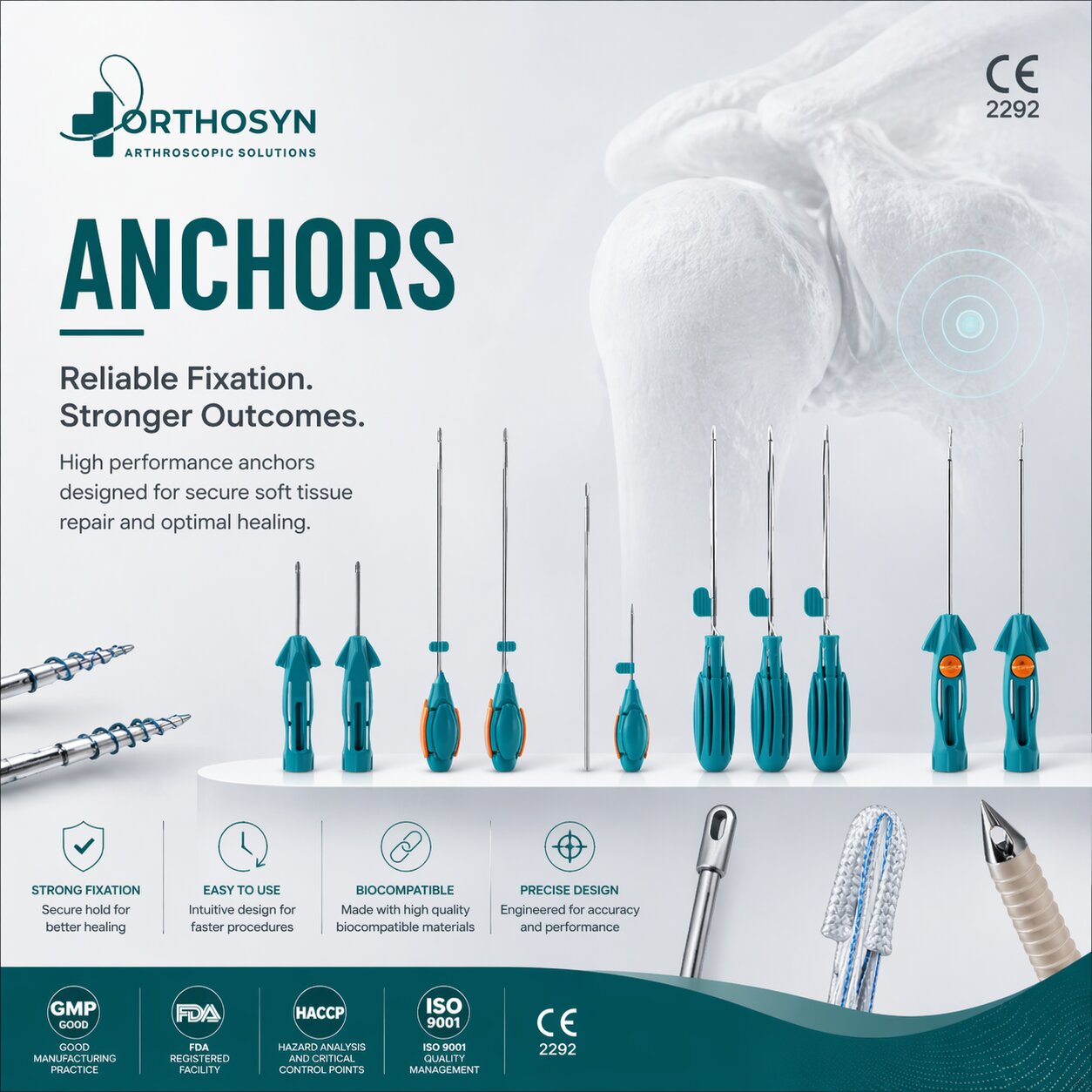
Orthosyn develops anchor systems for different arthroscopic fixation requirements, including Soft Anchors, PEEK Anchors, Titanium Anchors and Knotless Anchors.
Orthosyn Soft Anchors are available in multiple diameter options, allowing different anchor sizes to be selected according to the anatomical and procedural requirements of the repair.
For detailed product information and available Orthosyn anchor solutions: