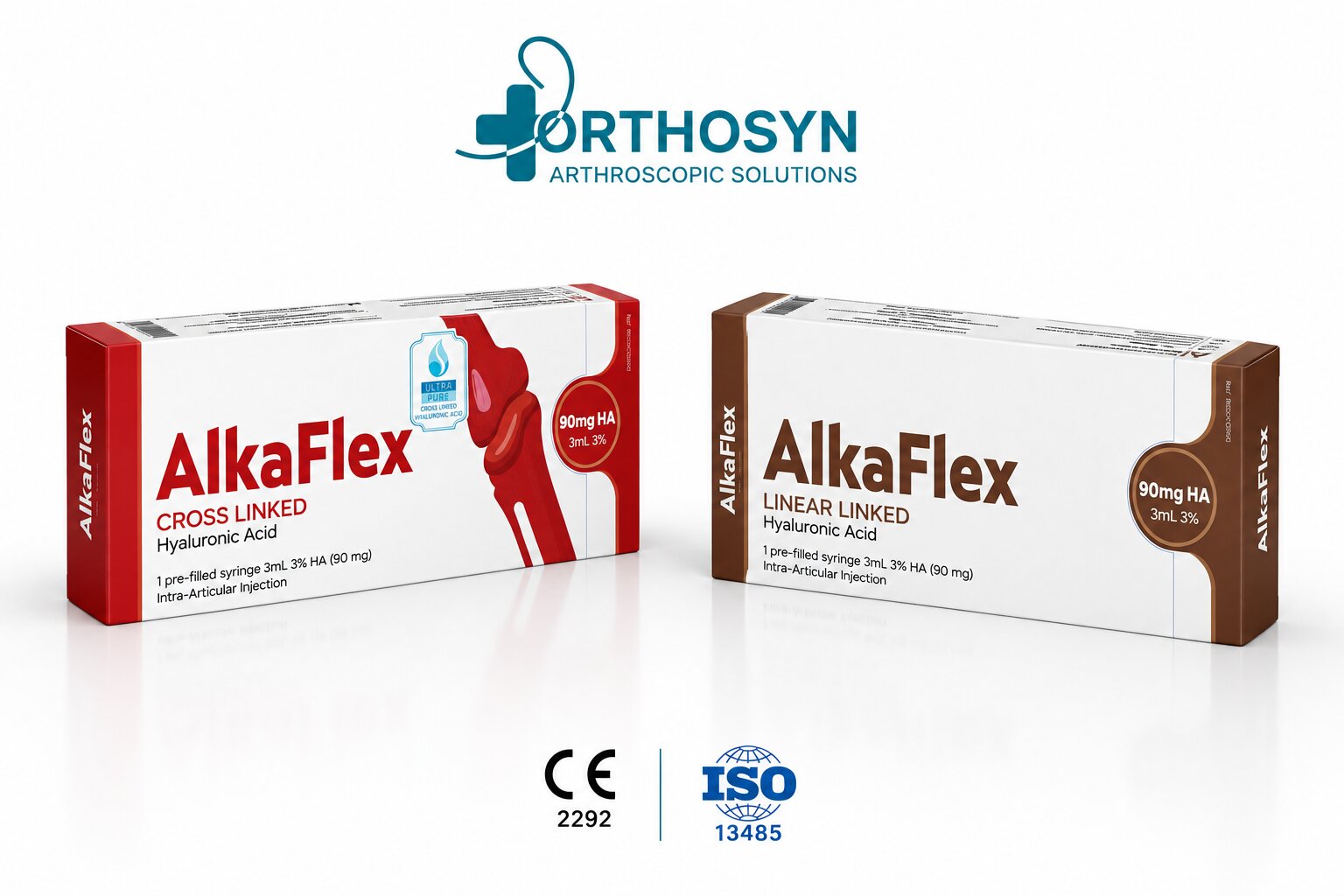
Hyaluronic acid (HA) injections have become an established option in the conservative management of knee osteoarthritis. Today, healthcare professionals can choose between cross-linked and non cross-linked formulations, each offering distinct physical characteristics and clinical applications.
Understanding these differences helps physicians select the most appropriate treatment based on individual patient needs and therapeutic goals.
Non cross-linked hyaluronic acid closely resembles the naturally occurring hyaluronic acid found in healthy synovial fluid.
Its primary functions include:
Because of its natural structure, it integrates smoothly into the joint environment.
Cross-linked hyaluronic acid is chemically modified to create stronger molecular connections between HA chains.
This structure generally provides:
These properties may allow longer-lasting biomechanical support within the joint.
Non Cross-Linked HA
Maintains a molecular structure similar to native hyaluronic acid.
Cross-Linked HA
Contains additional molecular bonds that increase stability.
Cross-linked formulations typically exhibit higher viscosity, while non cross-linked products generally maintain lower viscosity and easier dispersion within the joint.
Cross-linking generally allows the product to remain within the joint longer before natural degradation occurs.
The choice between formulations depends on:
Neither formulation is universally superior; each has specific clinical indications.
Regardless of formulation, hyaluronic acid injections are intended to:
Treatment should always be performed under the supervision of qualified healthcare professionals.
Orthosyn Medikal offers a comprehensive range of sterile intra-articular hyaluronic acid injections manufactured through microbial fermentation.
Our portfolio includes:
These products are designed to provide physicians with flexible treatment options for different stages of knee osteoarthritis.
Both cross-linked and non cross-linked hyaluronic acid formulations play valuable roles in modern osteoarthritis management.
Selecting the appropriate formulation depends on the patient's clinical condition, physician assessment, and treatment objectives. Understanding their structural and functional differences enables more individualized treatment planning.